Service Automation
SHARE POST
Table of Contents
1
The definition of service automation
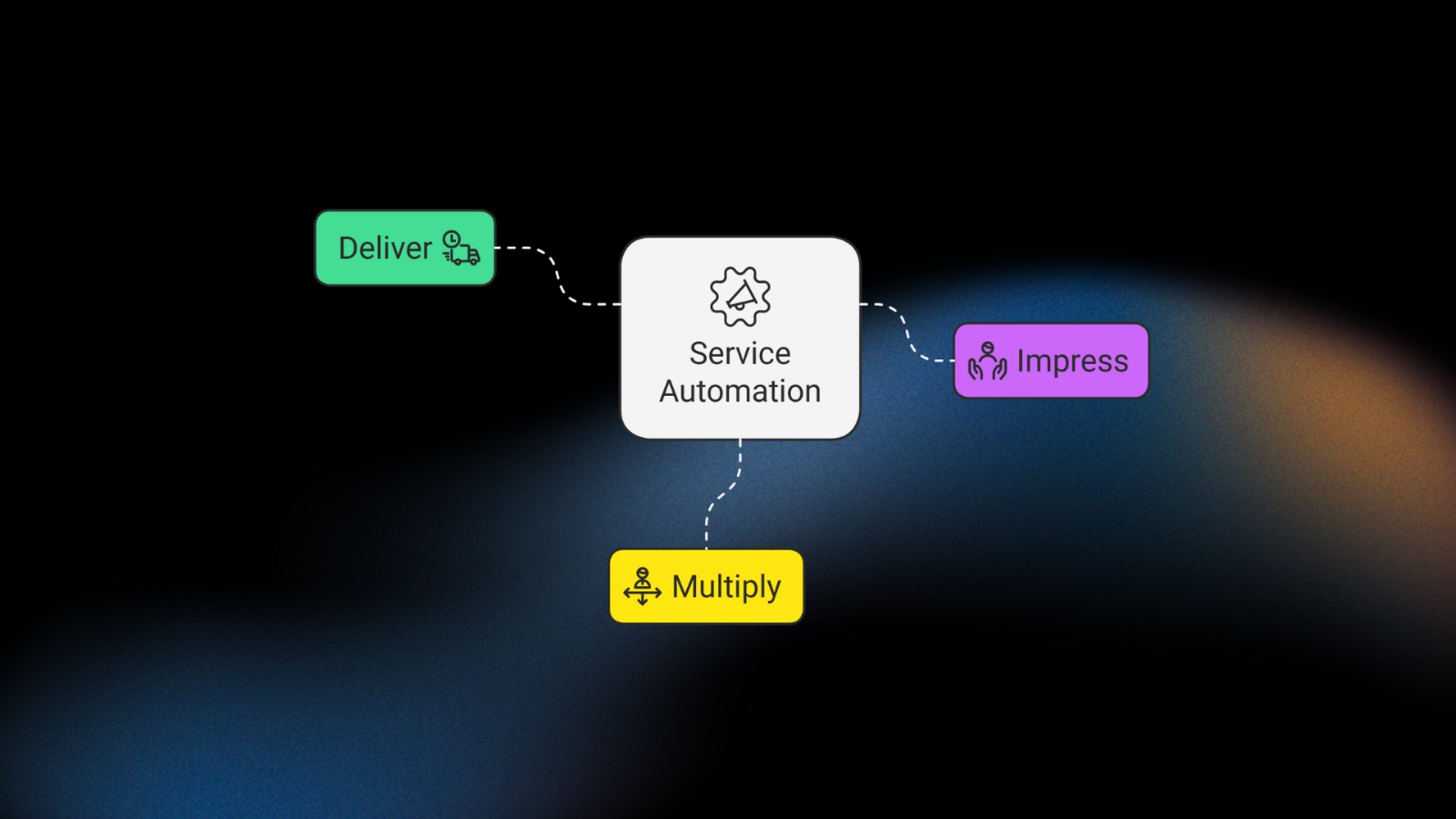
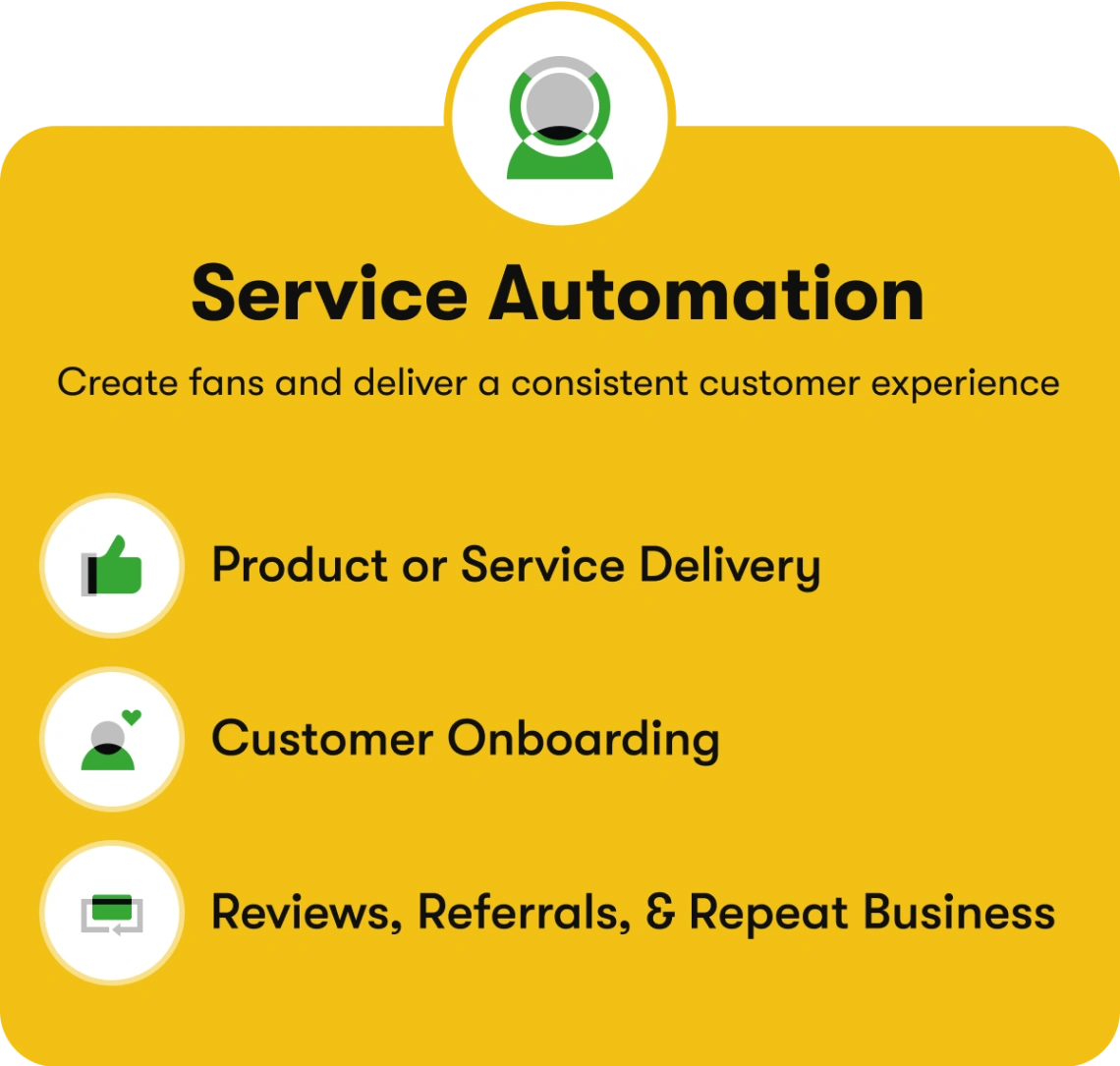
Service automation, also called fulfillment automation, is when a company automates processes in the customer journey that come after the sale is made. These processes fall into three buckets:
- Deliver: Provide the product or service the customer purchased — quickly, easily and professionally — by automating things like onboarding communications and assigning fulfillment tasks to team members.
- Impress: Go above and beyond simply delivering what you promised and wow your customers with exceptional service and value. This turns customers into raving fans and advocates of your business.
- Multiply: Prompt customers to buy again, and share their positive experiences with others through testimonials, reviews and referrals.
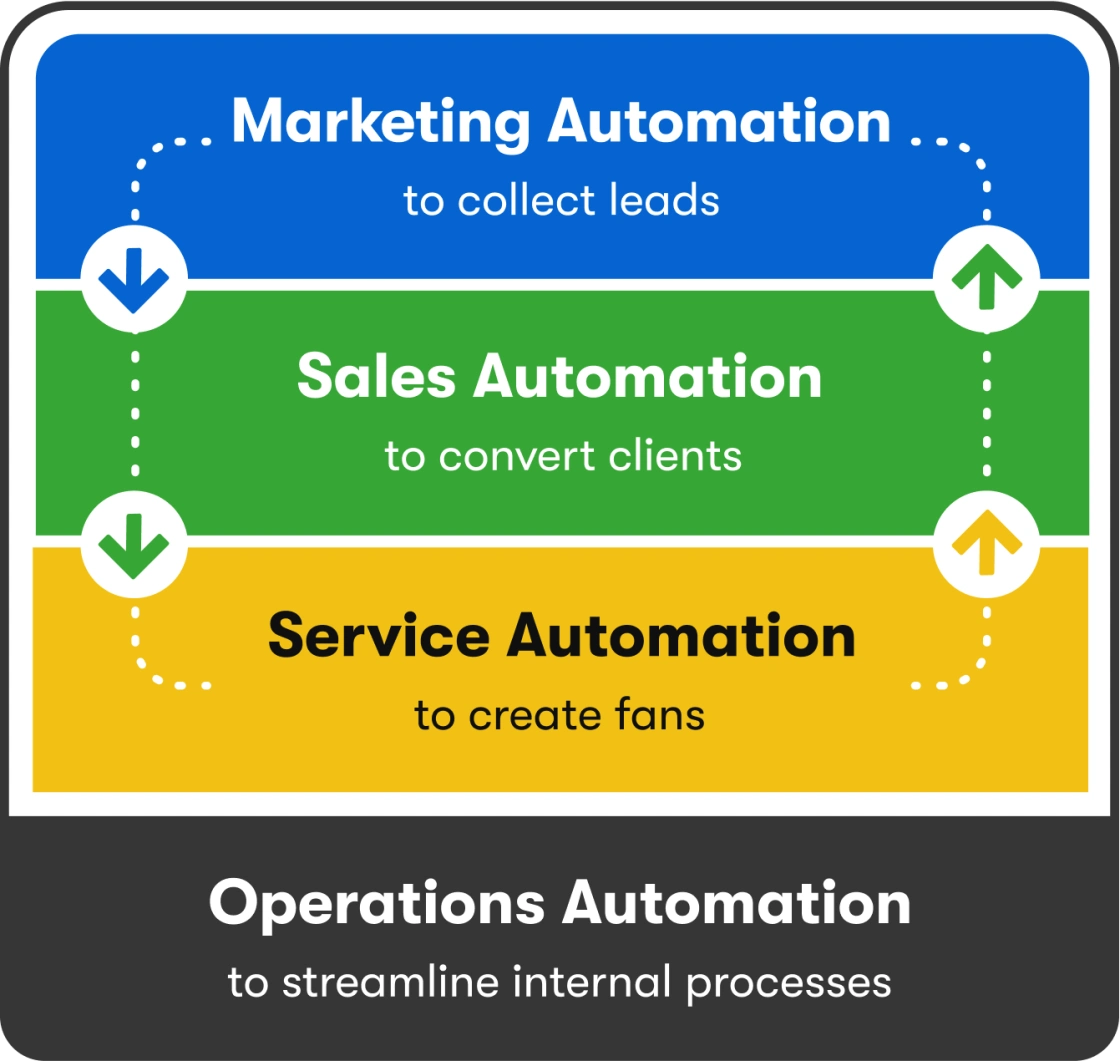
Service automation is the third category within small business automation, which is eliminating repetitive tasks across your entire business through the use of automation software. This enables a company to achieve more with a small business team.
Business automation includes:
Let’s dive deeper into how service automation works and how to use it to benefit your business.
2
The benefits of service automation
However, generating repeat business and referrals from existing customers is a much more cost-effective way to increase sales than going after new leads.
Small businesses can boost revenue and profits by using service automation to:
- Deliver consistently, leading to a better customer experience
- Impress customers so they’re eager to share their experience with others
- Generate upsells and cross-sells from new customers
- Increase repeat sales from past customers
- Generate social proof by asking every happy customer for a review and referral
- Efficiently manage logistics such as subscription management and invoice follow-up
- Reduce manual labor for team members so they can get more done each day
Let’s take a look at some examples of how it works in practice.
3
Examples of service automation
When a sale is made, there are usually several things that need to happen to fulfill the purchase. Some things will remain hands-on, like a consulting call or service delivery, but all or most of the administrative work surrounding the hands-on tasks can be automated. Here’s an example:
- Coaches: When a client says “yes” to a coaching package, automatically send a welcome email containing an invoice/payment link and an appointment booking link.
Wowing customers with the unexpected
Everyone expects good customer service. So to really get your customers talking about how amazing your business is, you need to go above and beyond with things they don’t expect. Some “wow” experiences will come from your team members, yet others can be automated, like this example:
- Authors and speakers: After someone buys your book or course, they automatically get an email from you offering to send your book to a friend of theirs, for free.
Upselling and cross-selling
You can use automation to offer an additional product or service at the time the customer makes their initial purchase, immediately after the purchase, or later during the delivery or post-delivery experience. There are many ways this can be done. Here are a couple examples:
- Service providers: On the checkout page, the client is offered a discount if they decide to upgrade their package choice. Later, they get an automatic email offering a complementary service from an affiliate partner of your company.
- Product sellers: When a customer buys a product, they automatically get an email highlighting related products that they might also be interested in.
Asking for testimonials and reviews
People won’t leave you reviews unless you ask for them! Manually contacting every customer is time-consuming and easily automated with business automation software like Flow Connect Crm. Here’s one example:
- Course creators: When a student completes a module in your course, automatically send an email congratulating them and asking them to share what they learned on social media.
Asking for referrals
Asking for referrals can be awkward in person, but it’s easy to automate! And referrals are the most cost-effective form of lead generation there is, because it’s free and comes with built-in social proof.
- Consultants: When a project is marked as “Done” in the fulfillment pipeline, an automated email thanks them for their business and asks them if anyone in their network could also benefit from your service.
Generating repeat sales
- Service providers: After a service is complete, the customer gets an automatic email with the details of their session, an invitation to schedule their next service date and a discount for signing up for recurring service. After three sessions, they get an email asking who else they know who might like your service.
4
How to apply service automation in your business
Automating your entire business is a big undertaking, but at Flow Connect Crm we’ve been helping businesses do just that for over 20 years, and we’ve found that the key is to start small by identifying your low-hanging automation opportunities. As you start seeing results — experiencing greater profits with less effort and time savings that give you the freedom to work on bigger priorities — you’ll soon be asking: What else can I automate?
To try it for yourself, sign up for a free business mapping session with a Flow Connect Crm small business growth expert. They’ll help you identify the three biggest automation opportunities in your business and provide the results in a Growth and Freedom Playbook customized to your business. Get started now.